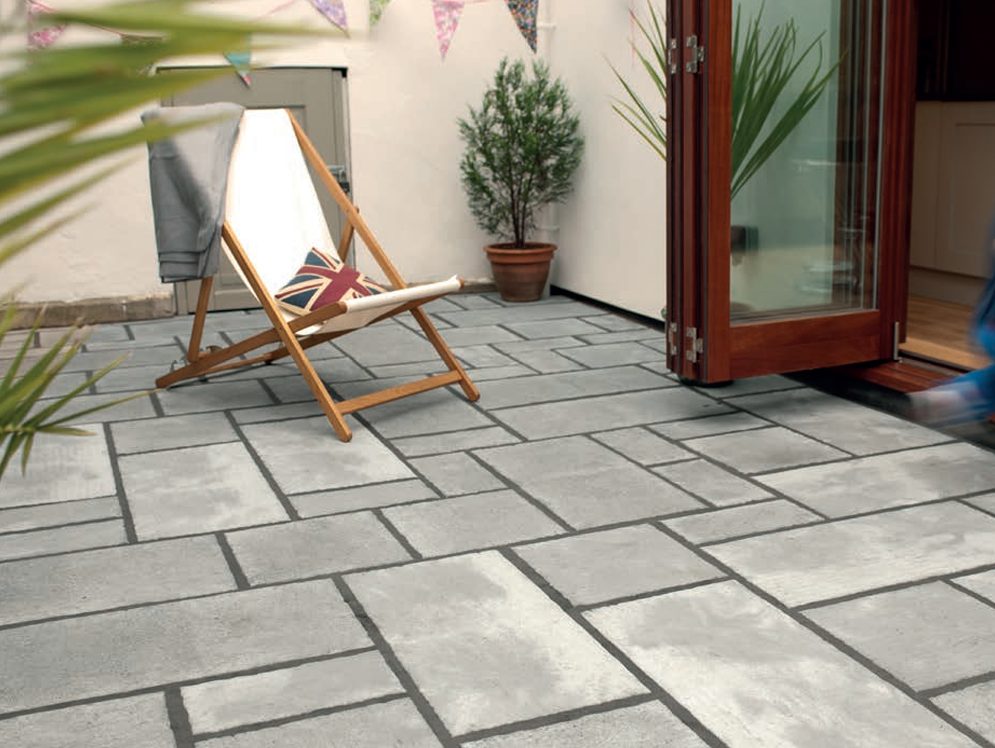
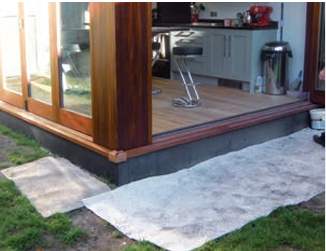
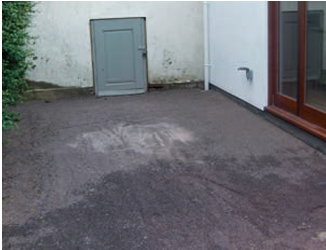
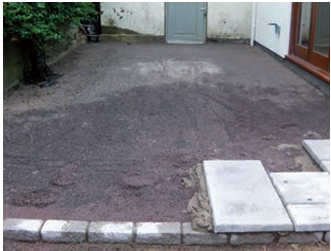
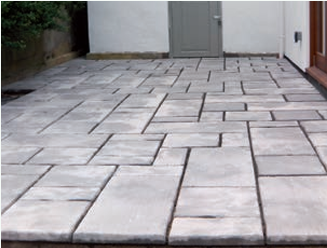
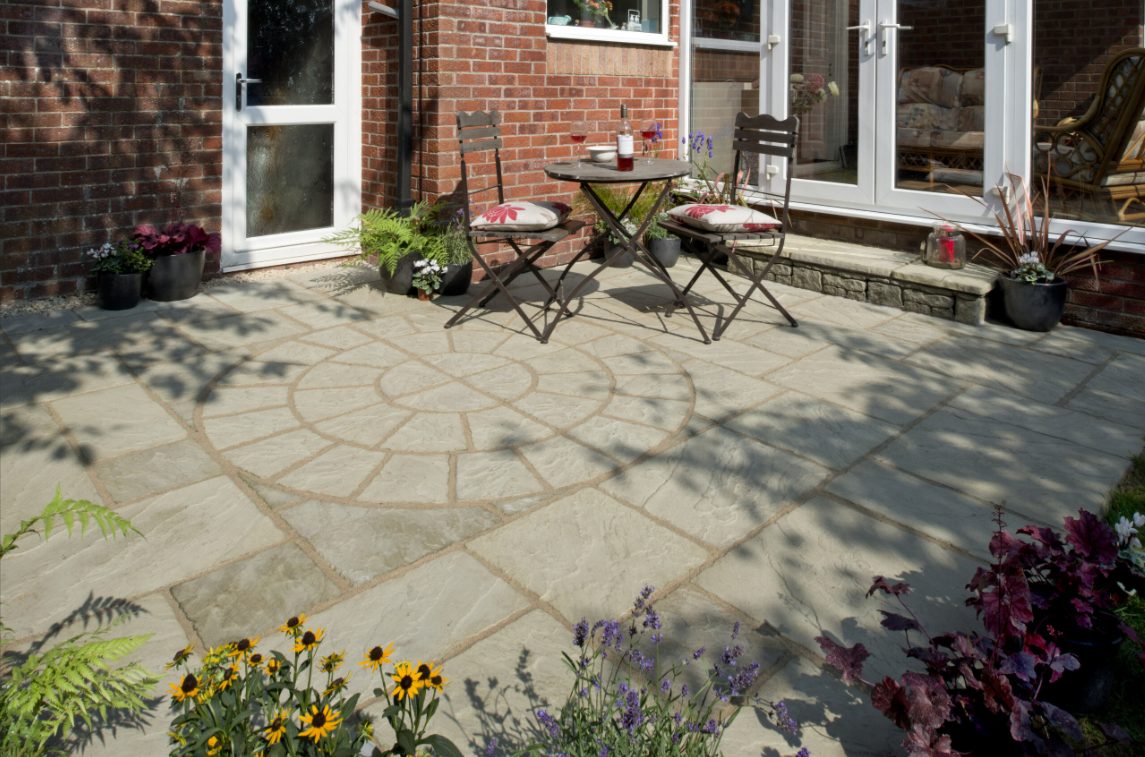
Here are all the Do’s and Don’ts to help with your Patio Construction
Step 1 (Planning)
Decide where you want to lay your new patio. First sketch out the area to be paved, showing all dimensions. Include in the drawing items such as drains, height of damp proof course, the slope or fall of the area and any other constraints e.g. walls, lawns, steps etc. Visit Bowland Stone or your nearest stockist to create your laying guide using the Bowland Stone Patio Generator.
Step 2 (Preparation)
The area to be paved must be firm and compact to avoid any subsidence. If necessary dig out any soft soil and replace with crushed stone preferably with a high dust content. The level of the ground at this stage should be approximately 55mm to 80mm below the final level of the paved area. Poor drainage or installing paving onto an existing concrete/paved base can lead to high levels of moisture underneath the paving. This may result in discolouration/staining on the surface of the paving due to absorption of trapped water.
Step 3
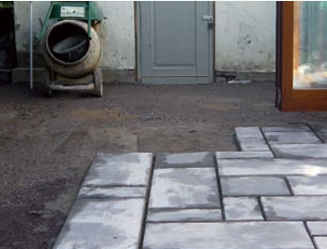
At this stage as well as a trowel and shovel, a spirit level will be needed at least the length of the longest slab that is to be laid. Determine the quantities of sand and cement required for ‘bedding’ the slabs on. As a guide the bed should be between 15mm and 40mm thick and mixed in a ratio of 4 parts sand to 1 part cement, (mixed together in manageable quantities either by hand or a small mechanical mixer). Decide where to lay the first slab, this is usually a corner slab and probably at the highest point. In most cases a slope of 1:100 is adequate to enable surface water to fall away from the house. It very often helps to use string and mark out the area, which helps to keep the joints at 90 degrees to each other. Continue laying your patio following your laying guide. We recommend that all paving is laid on a full mortar bed.
Step 4
The method of laying should be such that each slab must not bear any weight for at least one day. Care should also be taken to ensure that cement is kept off the surface of the paving as it can cause staining. The exact position of each slab should be achieved first time. To do this, do not apply excessive force on the slab but check with a spirit level and apply gentle pressure until the exact position is found. It is best to lay full slabs first and then cut any odd shapes and sizes that may be needed.
Step 5
Unlike all the previous stages, grouting can only be done on a dry day*. Building sand should be used, mixed at a ratio of 5 parts sand to one part cement. (*Alternatively use a jointing compound which requires water & can therefore be used during inclement weather). Bowland Stone colour additive can be used to complement or contrast the overall appearance. The total quantity should not exceed one bucket of grout at a time. With the use of either a bricklayers pointing trowel or pointing tool, push the mix into the gaps to form a uniform surface to the pointing ensuring that it is kept slightly below the surface of the paving. Excess mix should be swept aside and re~used but do not brush it over the slabs until the mix has become dry. It is essential that the mix is moist but not wet to prevent the possibility of staining.
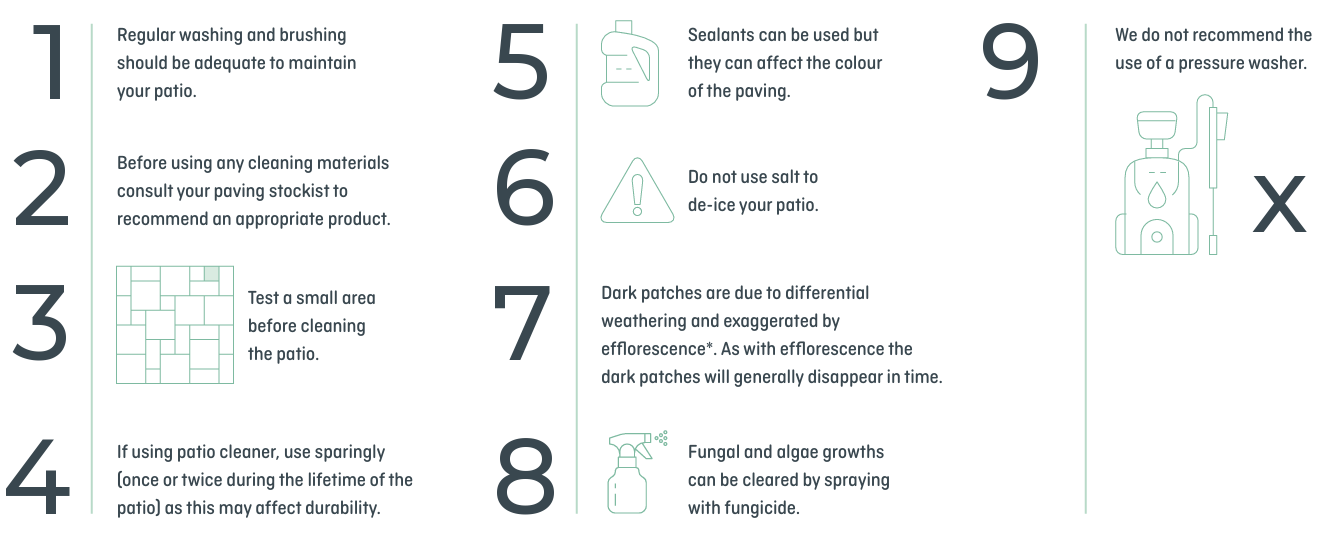
The following tips should help you keep your paving looking at its best for longer – This section will help you in caring for your patio correctly
Top Tips:
Please note that although sometimes unsightly, blemishes or stains are unlikely to affect the performance of the paving. Always follow manufacturer’s instructions when using cleaning equipment or materials.
Product Colour
All images shown on this website are for illustrative purposes only. Every effort is made to ensure accurate colour representation, however due to photographic processes and varying light conditions, colours may not exactly match current production. We strongly recommend that colours are judged and chosen from actual materials and samples are sought from your local retailer. It is also worth noting that the colour of new products will inevitably vary compared to those which have been installed for a period of time as weathering does take place. Natural Stone products will naturally feature more colour variation than concrete products and several samples should be obtained. Bowland Stone does not take responsibility for any colour inaccuracies within this website compared to the products featured. Although every effort is made to ensure colour consistency, variations between production batches can occur, especially in blended shades. We recommend that where possible products are ordered from one batch and where multiple packs of product are ordered, thoroughly mix the products by drawing from different packs when laying.
Sizes
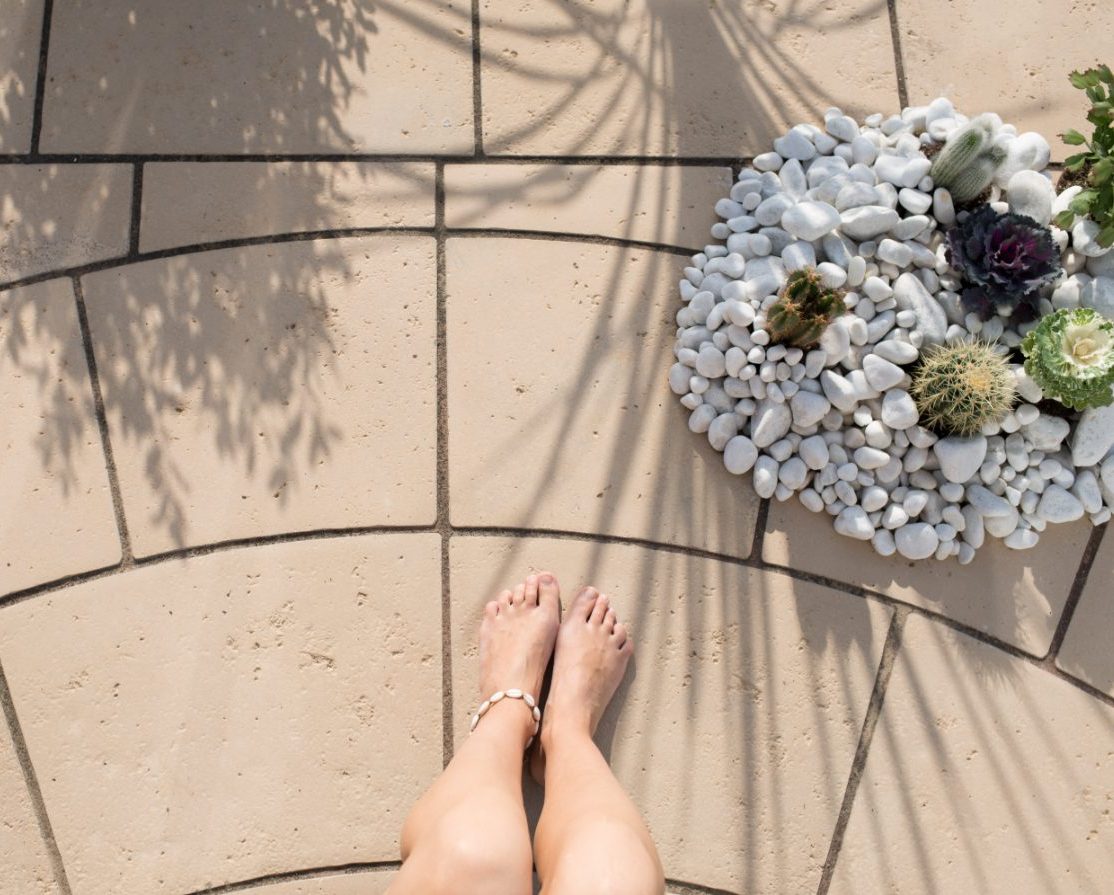
Bowland paving is manufactured to capture the authenticity of natural slabs and as such they may vary in thickness. All sizes & dimensions are nominal, subject to manufacturing tolerances and are for guidance only. It is recommended to ‘dry lay’ your design first starting from the centre, (especially Bowland Stone feature kits including circles, stars, octagons, & ovals), which will allow you to establish the correct spacing between each slab to ensure your design fits perfectly in the area allocated.
Efflorescence
All quality products with a high cement content may suffer the temporary phenomenon of efflorescence. It can appear as a white powder or just an apparent lightening/fading of surface colour. It is caused by the migration of soluble salts (calcium hydroxide) through the damp paving surface which then reacts with atmospheric carbon dioxide to form calcium carbonate – a white deposit of low water solubility which is apparent as the surface dries. Ideally it is better to let efflorescence disappear naturally, however it can be removed chemically by using propriety acid washing agents or brick/ patio cleaners in accordance with manufacturer’s instructions. Trials should be carried out on samples or on a limited area, in order to assess the effect on the appearance. Please note that this can alter the appearance of the concrete by changing the surface texture and may also damage the concrete surface.
Weathering
Natural weathering and site conditions will also affect the appearance of paving along with seasonal manufacture or naturally occurring variations of the aggregates used in manufacturing. Differential weathering can cause patchy, dark discolouration on the surface of individual paving slabs, due to the paving curing at different rates. This will generally diminish over time and will not affect the long term performance. All products can develop algae and organic growths under certain environmental conditions and may require cleaning. Areas adjacent to borders, plant pots and trees may discolour from transfer of plant life. Specialist maintenance advice may need to be sought. Bowland Stone do not recommend the use of road salt or the use of pressure washers, as both can damage the surface and appearance of the paving. Poor drainage or installing paving onto an existing concrete/paved base can lead to high levels of moisture underneath the paving. This may result in discolouration/staining on the surface of the paving due to absorption of trapped water.
Health and Safety / Product Handling
Care should be taken when handling / installing Bowland Stone products, we always recommend suitable lifting equipment or 2 person lifting on our larger size paving slabs. • Always wear gloves and safety footwear when handling products • Wear appropriate PPE if using cutting equipment • Ensure products are on level ground before unwrapping and the product is supported before cutting bands to avoid breakages, chipping or damage to yourself
Delivered Goods
All products must be checked upon receipt. In the unlikely event of products reaching you in an unsatisfactory condition, please contact your retailer immediately, allowing time for the rejected product to be inspected and or replaced. Minor scuffs or bruises may occur during delivery, movement on-site and installation are generally unavoidable, in our experience these will weather in over time. Bowland Stone cannot accept any responsibility for uplifting and relaying costs of defective products if upon inspection, it is deemed that the defect would have been apparent prior to laying.
Storage
Prior to laying, it is imperative that paving is stored in a vertical position, ideally with original spacers in between paving (not stored face to face touching) and it is adequately covered. Rain/ moisture can become trapped and settle between paving if left open to the elements, causing a drizzle like stain on the surface of the paving (particularly apparent in light coloured products). Bowland Stone will not take responsibility for any paving that has developed water marks/stains due to inadequate storage.
Application
Bowland Stone products, unless otherwise stated, are primarily intended for domestic/landscape use only. Decorative paving is not recommended for use on driveways. For areas subject to vehicular use, block paving products are recommended (see pages 40-43).
Liability
No charge is levied for this brochure and liability in respect of any statements, conditions, warranties and representations made on behalf of Bowland Stone is limited in accordance with the terms set out in Standard Conditions of Sale. While every effort is made to give sound advice, Bowland Stone cannot accept any responsibility for any loss, damage or injury as a result of following it. Bowland Stone will not take any responsibility or liability in respect of products being used for any purpose other than those for which they were intended. Due to our continuous evolution of product design and improvement, our range and specifications are subject to change without notice. Customers should check that all information is up to date. Bowland Stone will not be liable for any fair wear and tear, wilful damage or negligence of the customer or abnormal conditions.
Costs
Please refer to your local retailer for all up to date pricing. Please be aware that paving is just one element of the total cost of laying a patio and is rarely the largest outlay.
Additional Product Information
Natural Stone
Unavoidable colour and thickness variations occur within the natural stone ranges. Our natural stone is sourced from suppliers who are registered with the ‘ethical trading initiative’. Natural Stone may develop added marking, deposits or patches as mineral content oxidises. Product should be mixed from a number of packs prior to installation and should always be laid on a full wet mortar bed. All Silver Grey Natural Sandstone products vary with differing geological conditions. Such variations can lead to small particles of ironstone within the product creating a darkening of the surface with natural weathering. This natural weathering is more obvious with Silver Grey Sandstone compared to other natural stone products due to its paler colour. Sandstone needs to be handled very carefully when installing to minimise staining and we would advise that Smooth Natural Sandstone be sealed prior to laying using a breathable sealer. However, if this is not possible, it should be covered up as it is installed and sealed as soon as it is laid. A slurry primer (such as Bradbond) should be applied to the underside of all Smooth Natural Sandstone, Natural Slate, Riverwashed Limestone and Granite paving prior to laying to improve adhesion. Blue Black Limestone is UV sensitive and over time will lighten in colour. It is recommended to seal limestone prior to laying or as soon after laying as practically possible. Never use acidic based products on limestone.
Porcelain Paving
Manufactured from the finest raw materials, under strict controls allows for exceptional technical characteristics of full-body unglazed porcelain paving.
Anti-slip Surface Resistance
• Class 3 / R11 / Group C
The use of a slurry primer to the reverse of each paver is both essential and more importantly critical to the overall performance of porcelain paving. Applied to the underside using a stiff brush, it provides an exceptional bond between paver and the full wet bed underneath. Mixed to manufacturers instructions and applied with care it forms an immediate bond which prevents the pavers from lifting or potentially moving in the future when correctly laid. We recommend a porcelain jointing compound for pointing. Do not use white cement nor materials containing black pigments. Finishes are intentionally manufactured with slightly uneven colour tones and surface decoration, these subtle variations set these products apart. Porcelain paving can be cut on site and mostly to any size. We recommend the use of a portable saw (table saw, petrol driven disc cutter, rechargeable angle grinder) fitted with a good quality diamond porcelain blade. The blade should be water fed for dust suppression and to keep the blade cool. Scoring the product first and sawing from the face downwards will help to alleviate the potential risk of edge/surface chipping. Porcelain paving can be cleaned by applying a suitable cleaner. We strongly recommend the finished laid area be thoroughly cleaned/washed down which helps remove general building dirt, grout residue and any grease deposits that may be present. It is also recommended that periodic cleaning with porcelain cleaner will keep the paving looking its best. Dependent on the type of stain / surface residue present (i.e. suction marks, grease, grout, general building site dirt) there is a wide range of off the shelf specialist cleaners available. Always check the manufacturers instructions first before applying to any test area.